English| EUR
Suggested for you
More currencies
Choose a language
The Aegean coastline around Rhodes delivers consistent underwater conditions that answer the question with hard numbers: 20–40 meter visibility most of the year, water temperatures between 16°C and 27°C, and a concentration of accessible wrecks and reef systems within a short boat ride. This guide covers what divers encounter here, when conditions peak, and how Rhodes compares to other Mediterranean destinations.
Quick answer
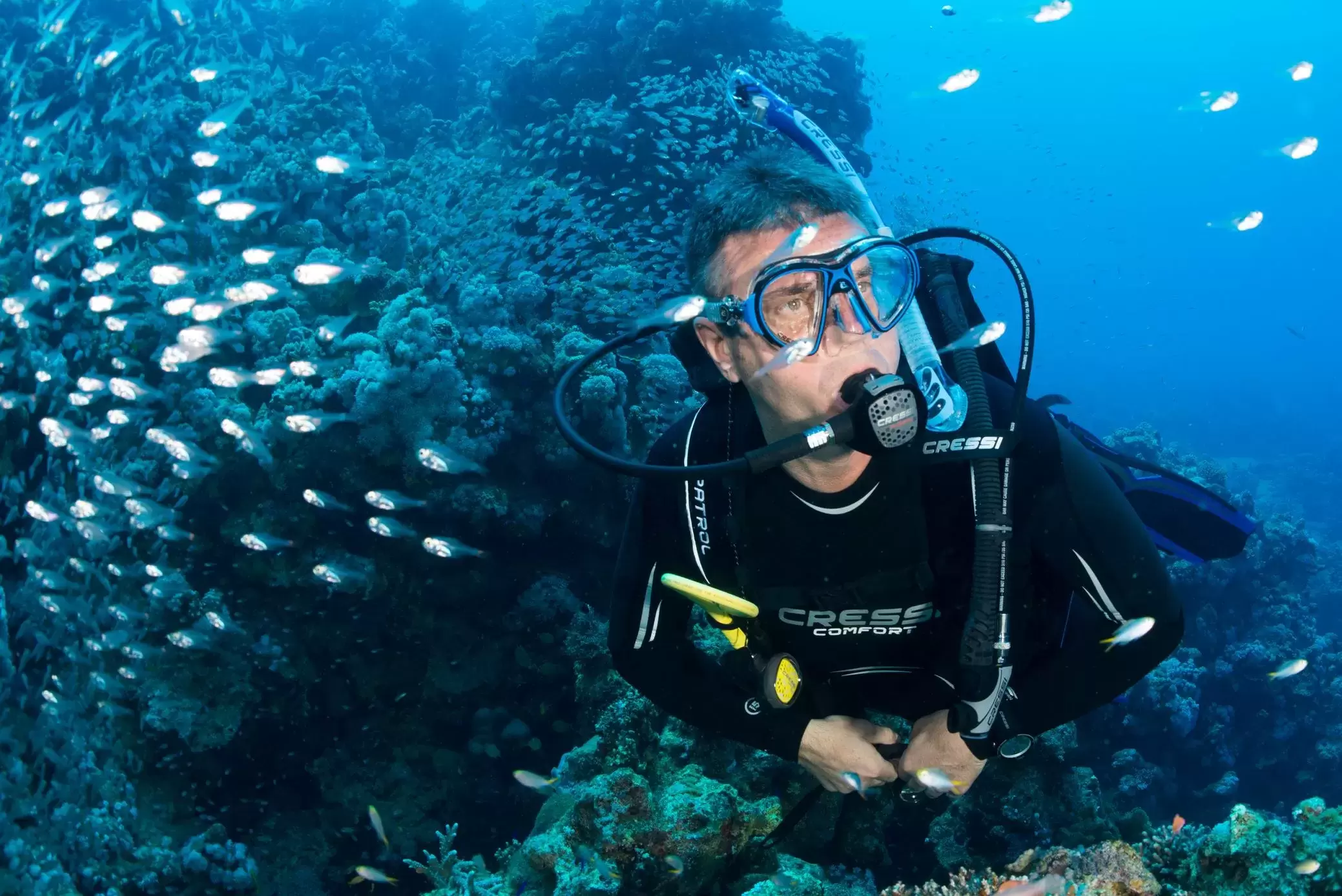
Is Greece good for scuba diving? Rhodes ranks among the Mediterranean's most reliable dive destinations, with visibility exceeding 30 meters during summer months and water temperatures reaching 27°C between July and September. The island's eastern and southern coasts shelter more than a dozen charted dive sites, including the Giannis D wreck and volcanic rock formations at depths from 5 to 40 meters, accessible to both novice and technical divers year-round.
The Dodecanese archipelago sits where three seas meet, and Rhodes—its largest island—holds a geographic advantage that shapes every dive: the island's eastern flank faces open Aegean water, while its southern coast catches currents sweeping up from Crete. That position delivers nutrient-rich water, stable thermoclines, and the kind of visibility that lets divers spot grouper from 20 meters out. Greece's reputation as a diving destination rests on accessibility rather than biodiversity. The Aegean lacks the coral density of the Red Sea and the pelagic traffic of the Atlantic, but it compensates with clarity, calm entry points, and a concentration of historical wrecks that have become artificial reefs. Rhodes specifically offers the Giannis D—a cargo freighter resting at 22 meters—and the older Plimmiri wreck further south, both colonized by sponges, octopus, and schools of bream. Volcanic rock formations near Lindos create swim-throughs and overhangs where moray eels shelter, and the shallow bays north of Faliraki serve as training sites where beginners log their first open-water dives in three-meter visibility. Water temperature governs the diving calendar here more than any other variable. Surface temperatures drop to 16°C in February and March, requiring a 7mm wetsuit or drysuit, then climb steadily through spring. By June, the thermocline settles at 23°C, and summer divers operate comfortably in shorties. Visibility peaks between May and October, when plankton blooms subside and wind patterns stabilize—morning dives before noon consistently deliver the clearest conditions, as afternoon thermal winds stir surface chop and reduce light penetration below 15 meters. The question of whether Greece suits serious divers hinges on expectations. Rhodes will not deliver hammerhead sightings or drift dives through pelagic corridors, but it provides year-round diving in protected water, with operators running daily trips and training programs in multiple languages. Divers seeking wreck penetration, macro photography in rocky shallows, or reliable conditions for certification courses find the island's infrastructure and underwater geography well matched to those goals.
“The Aegean lacks the coral density of the Red Sea, but it compensates with clarity, calm entry points, and a concentration of wrecks that have become artificial reefs.”
The period from May to October offers the most favorable conditions for scuba diving in Rhodes, characterized by warm water temperatures and high underwater visibility. Prioritizing morning arrivals is essential to ensure optimal diving conditions before the onset of afternoon winds.
20°C to 23°C water; calm seas
The water begins to warm, and coastal areas remain less congested than in peak summer.
25°C to 27°C water; consistent sun
These months offer the warmest water temperatures, though coastal sites experience higher surface traffic.
23°C to 25°C water; cooling air
Visibility remains high, and the water retains heat from the summer, providing comfortable conditions for extended dives.
—
Arriving between 10:00 and 12:00 provides the best lighting and calmest water surface before afternoon wind shifts.
Verdict: The best window for diving is during the shoulder months of May, June, or September, specifically arriving between 10:00 and 12:00 on weekdays.
Trident Diving School operates with consistent daily hours to accommodate divers in Rhodes. The facility remains open seven days a week to support exploration of the local coastline.
Access to public dive sites in Rhodes is available at no cost. Financial requirements for scuba diving relate exclusively to services provided by private operators.
Verdict: Public site entry is 0 EUR, while total costs depend on the specific dive packages selected from private operators.
Rhodes is located in the Dodecanese Islands, Greece, and is accessible via international flights to Rhodes International Airport (RHO) or by ferry from Piraeus and neighboring islands. Once on the island, local dive operators are situated in major coastal hubs like Rhodes Town.
Direct flights to Rhodes International Airport (RHO)
Main port in Rhodes Town (from Piraeus)
KTEL bus network to coastal dive sites
Driving via EO95 or coastal roads
Plan your arrival to the dive location between 10:00–12:00 to ensure optimal lighting and visibility before the afternoon wind shifts.
Understanding the specific conditions of the Aegean Sea helps divers maximize their underwater experience in Rhodes.
Wear a 3mm to 5mm wetsuit even in summer, as thermoclines can cause rapid temperature drops below 15 meters. Exposure protection prevents heat loss during longer bottom times in Mediterranean waters.
Surface conditions often change quickly due to the meltemi wind, so prioritize sites with sheltered bays or leeside protection. Consult local instructors about the wind direction before finalizing your dive plan.
Use streamlined gear to minimize drag against potential surge near rocky reefs. Proper weight distribution is essential for buoyancy control in the high-salinity water of the Dodecanese.
Most local topography involves volcanic rock formations and steep drop-offs requiring confident buoyancy control. Ensure you are comfortable with navigation over uneven, rocky seabeds before attempting deeper dives.
Bring a red filter for your camera to restore natural color balance lost at depths below 5 meters. The clear water provides high contrast, making it effective for wide-angle shots of underwater rock structures.
Diving in Rhodes requires documentation, physical readiness, and the right equipment before you arrive.
Everything you need to know about is greece good for scuba diving
Rhodes is a prime location for Mediterranean marine activities, offering clear waters and diverse rocky reefs. Many travelers ask is Greece good for scuba diving and find the conditions here ideal for both training and leisure. The island provides a rich underwater environment for those exploring Aegean marine life.
The island features unique volcanic rock formations, submerged caves, and a variety of Mediterranean fish species. Divers often discover ancient artifacts and vibrant sponges while navigating these protected coastal waters. It is an excellent region to practice buoyancy and underwater navigation.
Participants typically need a medical clearance and, depending on the experience, a recognized certification level. Beginners can enroll in introductory sessions led by certified instructors. Always verify your insurance coverage and documentation before booking your session.
Many dive centers offer junior programs and family-friendly experiences for children who meet the minimum age requirements. While is Greece good for scuba diving is a common query for families, centers in Rhodes ensure safety is the priority. Engaging in guided underwater tours helps children learn about marine conservation safely.
The best arrival window is 10:00–12:00 to maximize lighting and ensure stable water conditions. Arriving early helps avoid the afternoon winds that can affect visibility. Plan your sessions within the operational hours to enjoy the best clarity.
While the season varies, the warmer months provide the most comfortable water temperatures for extended underwater activity. As you research is Greece good for scuba diving, consider planning your trip during the peak summer months. Most facilities operate daily during the main tourism season.
Access to public coastal dive sites is 0 EUR, as there is no entry fee to the sea. You only pay for services such as equipment rental, boat transport, or professional instruction provided by private operators. Check with the school for specific training costs.
Yes, the calm Mediterranean environment is perfect for those asking is Greece good for scuba diving for the first time. Many schools offer shallow shore dives designed specifically for novices to build confidence. Professional guidance ensures you remain safe while exploring the local underwater terrain.
Scuba Diving in Kolymbia
Read more Tickets & toursScuba Diving in Pefkos
Read more Tickets & toursScuba Diving in Rhodes Town
Read more GuidePADI Scuba Diving in Rhodes
Read more GuideBest Scuba Diving in Rhodes
Read more GuideScuba Diving Rhodes Prices
Read more Tickets & toursScuba Diving in Faliraki
Read more Tickets & toursScuba Diving in Lindos
Read more