English| EUR
Suggested for you
More currencies
Choose a language
Rhodes operates year-round PADI dive centers offering beginner courses and guided wreck dives along the island's eastern and southern coasts. Most centers run daily departures between April and October, with limited winter schedules dependent on sea conditions.
Quick answer
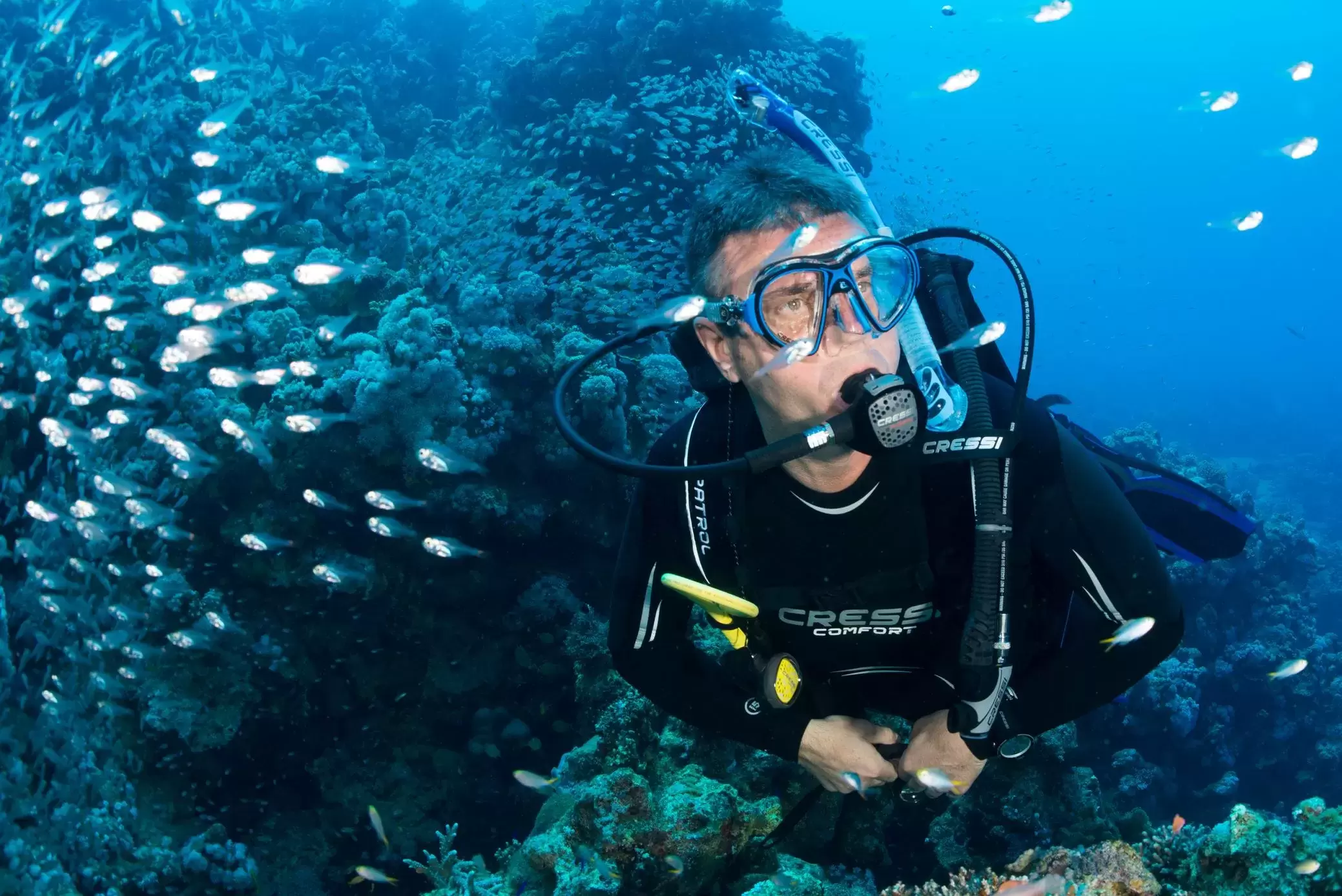
PADI-certified dive centers in Rhodes operate daily from 08:00 to 20:00 during peak season, with a typical Discover Scuba Diving experience priced at 70 EUR per person. Morning departures between 08:30 and 11:30 offer the best underwater visibility and calmest sea conditions. Centers cluster around Faliraki, Kolymbia, and Rhodes Town, with wreck sites accessible by boat within 20–40 minutes.
Rhodes sits at the crossroads of three seas—Aegean, Mediterranean, and Libyan—creating underwater topography that ranges from shallow reefs suitable for first-time divers to deep wrecks requiring advanced certification. The island's eastern coastline shelters more than a dozen documented dive sites, including the SS Giannoula K, a cargo ship scuttled in 1983 that now rests at 24 meters and serves as a training ground for PADI Advanced Open Water courses. PADI dive schools in Rhodes follow the organization's global standards, meaning a Discover Scuba Diving session includes pool training, a shallow-water beach dive, and a qualified instructor for every two participants. The certification pathway—from Open Water through Divemaster—takes between four days and three weeks depending on the level, with theory modules completed online before arrival. Water temperatures range from 16°C in February to 27°C in August, dictating wetsuit thickness and the practicality of multi-dive days. The island's dive calendar peaks between May and September, when visibility reaches 25–30 meters and ferry schedules allow same-day trips to offshore sites near Symi and Chalki. Winter diving remains possible but depends on wind patterns—the meltemi subsides after October, yet southern storms can close boat access for days. Most operators require 24-hour advance booking during summer and will cancel dives if wave height exceeds 1.5 meters, a threshold that protects novice divers but frustrates those targeting deeper wrecks. Dive shops provide all equipment in the base price, though photographers pay extra for underwater camera rentals. Certification cards from other agencies—SSI, CMAS, NAUI—are recognized, but cross-agency training requires instructor approval and sometimes a skills review dive. Nitrox fills cost an additional 10–15 EUR per tank and require proof of enriched-air certification, a specialty that extends bottom time on the deeper Kolymbia reef walls where grouper and octopus congregate in the rock fissures.
“The island's eastern coastline shelters more than a dozen documented dive sites, including the SS Giannoula K, a cargo ship scuttled in 1983 that now rests at 24 meters.”
The optimal window for scuba diving in Rhodes is the early morning, specifically the best arrival window of 08:30–11:30. During these hours, the water remains at its calmest and visibility is at its peak, providing the most stable conditions for PADI-certified training and Discover Scuba Diving experiences.
Water temperatures 19°C–22°C; stable visibility.
Early summer offers pleasant water and manageable crowds.
Water temperatures 23°C–26°C; calm conditions.
This peak season features the warmest water temperatures.
Water temperatures 22°C–25°C; clear visibility.
Warmer water lingers, and coastal sites are less crowded.
—
These slots provide the most consistent water clarity and quietest conditions for training.
Verdict: For the most consistent conditions and clearest water, plan your visit for a weekday morning between May and October, aiming for arrival between 08:30 and 11:30.
The PADI diving centers in Rhodes operate on a consistent schedule throughout the week. You may plan your visit on any day during the following hours.
Preparing for a PADI scuba diving session in Rhodes requires health verification, booking confirmation, and gathering the right documentation. The entire preparation process takes 1-2 days before your scheduled dive.
Review the PADI medical questionnaire online before booking. If you answer yes to any health question, you'll need a physician's clearance letter—arrange this 48 hours ahead to avoid last-minute cancellations.
Call +30 22410 29160 or visit https://www.tridentdivingschool.com to confirm available dates and reserve your spot. Staff will explain what's included in your session and answer certification questions.
Bring a valid photo ID and any dive certifications if you have them. If a medical form applies to you, pack the signed physician clearance—dive centers cannot proceed without it.
Bring swimwear, a towel, reef-safe sunscreen, and a change of clothes. The center provides all scuba equipment, but having your own mask improves comfort if you wear contact lenses.
Rhodes dive centers are spread across the island—verify your pickup location or driving directions the day before. Mobile signal can be weak in coastal areas, so download maps offline.
Prepare these essentials before your dive to ensure a safe and smooth experience.
Everything you need to know about rhodes scuba diving padi
A typical session introduces participants to underwater breathing techniques and marine life exploration under the guidance of certified instructors. This rhodes scuba diving padi introduction focuses on safety and basic skills within a controlled environment.
Yes, many centers offer introductory programs for beginners, such as the Discover Scuba Diving experience, which does not require prior certification. You will receive professional instruction to ensure you are comfortable with your buoyancy and underwater navigation.
The typical price for a Discover Scuba Diving experience is 70 EUR per person. This fee usually covers the use of necessary gear and the guidance of a professional instructor for your dive.
The best arrival window is 08:30–11:30, as these morning hours offer the best light and calmest water conditions. Planning your rhodes scuba diving padi session during this period ensures better underwater visibility and a more pleasant overall experience.
Participants generally need to be at least 10 years old to engage in introductory scuba activities, though specific age limits can vary by school. It is important to ensure all participants are in good health and comfortable in the water before beginning.
Given the popularity of coastal activities, booking in advance is recommended to secure your preferred slot. You can find more information and scheduling details on the official site at https://www.tridentdivingschool.com.
All essential gear, including masks, fins, regulators, and buoyancy control devices, is provided by the diving center. You should bring your own swimwear, a towel, and sun protection for use before and after your time in the Mediterranean Sea.
Scuba Diving in Kolymbia
Read more Tickets & toursScuba Diving in Pefkos
Read more Tickets & toursScuba Diving in Rhodes Town
Read more GuideIs Greece Good for Scuba Diving?
Read more GuideBest Scuba Diving in Rhodes
Read more GuideScuba Diving Rhodes Prices
Read more Tickets & toursScuba Diving in Faliraki
Read more Tickets & toursScuba Diving in Lindos
Read more